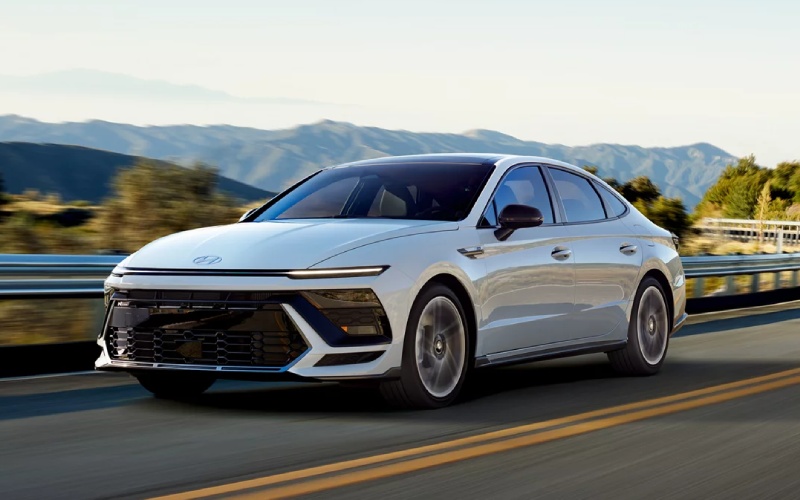
Tustin Hyundai - 2026 Hyundai Sonata vs 2026 Toyota Camry — Which Sedan Has the Smarter Driver-Assistance Tech for Daily Commuters near Irvine, CA?
When shoppers compare midsize sedans, a common question comes up fast: which model offers the more capable, confidence-inspiring driver-assistance technology for the real world? For daily commuters around Irvine, CA, the short list usually narrows to two: the Hyundai Sonata and the Toyota Camry. Both bring advanced features standard, but how these systems work on actual streets, ramps, and crowded parking lots can make all the difference. The Sonata’s Hyundai SmartSense suite includes familiar standbys like Forward Collision-Avoidance Assist, Lane Keeping Assist, and Blind-Spot Collision Warning, plus available Highway Driving Assist that helps center you in the lane and maintain distance on well-marked highways. Toyota Safety Sense™ 3.0 equips every Camry with a robust foundation including a Pre-Collision System, Lane Tracing Assist, and Road Sign Assist, with available Traffic Jam Assist adding low-speed, hands-on convenience in stop-and-go freeway traffic. The distinction lies in how much extra clarity and control each car gives you when your commute gets complex—merging, parking, and negotiating tight spaces.
Two Sonata-exclusive options stand out. First, Blind-Spot View Monitor displays a live camera feed in the cluster when you signal, giving more than a warning light—it gives you eyes where you need them. Second, Remote Smart Parking Assist lets you guide the car into or out of a tight space from outside using the key fob, easing curbside pickups or narrow garage maneuvers. Camry offers standard Blind Spot Monitor and helpful parking aids, but it does not provide a blind-spot camera feed or remote parking capability. On the highway, both vehicles deliver smooth adaptive cruise and lane assistance; however, many drivers prefer the Sonata’s conventional automatic transmission feel on gas models, which avoids the elastic sensation some associate with e-CVTs during lane changes or quick passes. Add available Surround View Monitor for a composite view around the Sonata, and the result is a sedan designed to simplify urban and suburban travel at every turn.
- Foundational feature set: Sonata includes Forward Collision-Avoidance Assist, Lane Keeping Assist, and Driver Attention Warning; Camry brings a Pre-Collision System, Lane Tracing Assist, and Road Sign Assist.
- Camera-based visibility: Sonata’s Blind-Spot View Monitor shows a live side-rear view in the cluster; Camry uses indicator lights without a live camera feed.
- Parking support: Sonata offers Remote Smart Parking Assist and an available Surround View Monitor; Camry focuses on traditional parking sensors and aids.
- Highway confidence: Sonata’s available Highway Driving Assist supports centered cruising; Camry offers available Traffic Jam Assist for low-speed, hands-on guidance.
- Transmission feel: Sonata gas models use a geared automatic for linear responses; Camry’s hybrid-only e-CVT prioritizes efficiency over shifting feel.
It is worth noting that both systems evolve through over-the-air updates and app connectivity, and both brands continue to refine how the car and driver share the work. That said, commuters who juggle rush-hour merges, tight parking structures, and frequent curbside stops tend to appreciate the Sonata’s camera-driven visibility and remote-parking convenience the most. If you frequently navigate school zones, crowded lots, or multi-lane transitions, these features reduce friction in ways you feel every day. From a usability standpoint, the Sonata’s 12.3-inch touchscreen, fast wireless Apple CarPlay and Android Auto, and available Bose audio integrate smoothly with the rest of the safety tech, requiring fewer taps and less time eyes-off-road.
For drivers who still want a spirited edge, the Sonata’s N Line variant layers stronger acceleration and a dual-clutch transmission onto that technology foundation, adding confident passing power when freeway gaps appear. The Camry’s hybrid system remains refined and responsive for cruising and light acceleration, particularly with available Electronic On-Demand All-Wheel Drive, but it does not pursue the same performance profile as the Sonata’s turbocharged option. Ultimately, if the question is which sedan equips you with smarter, more situationally aware tech for weekday life—intersections, parallel parking, and packed interchanges—the Sonata answers more use cases right out of the box. Visit Tustin Hyundai for a side-by-side feature walk-through and a short drive to test how each system handles your specific route and comfort preferences.
Frequently Asked Questions:
Does the Sonata’s Blind-Spot View Monitor replace shoulder checks?
No—always use mirrors and a shoulder check. The Sonata’s camera feed supplements your view, providing extra awareness when vehicles linger in hard-to-see areas.
Is Remote Smart Parking Assist useful if I don’t street park often?
Yes—it is handy in multi-story garages, narrow home garages, or crowded lots, especially when space is tight on either side of the car.
How does Traffic Jam Assist compare to Highway Driving Assist?
Traffic Jam Assist focuses on low-speed, hands-on support in congestion; Highway Driving Assist emphasizes centered cruising and gap-keeping on well-marked highways.
Which offers better audio for calls and navigation prompts?
Both are clear, but the Sonata’s available Bose system enhances voice fidelity and alert tones without sounding harsh at higher volumes.
Tustin Hyundai is serving Irvine, Lake Forest, and Fountain Valley with guided technology demos so you can see how these features behave on the roads you use most.