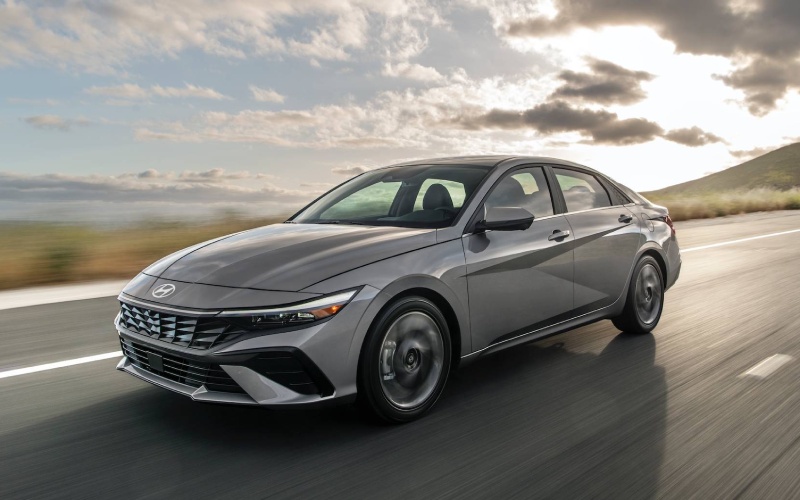
Tustin Hyundai - Which compact sedan has smarter highway driver assistance — 2026 Hyundai Elantra or 2026 Toyota Corolla near Irvine, CA?
Highway driver assistance is one of the most important differentiators when deciding between these two respected compact sedans. Both bring robust standard suites, but the details of how lane-centering, adaptive cruise, and cross-traffic backup aids work can change how relaxed you feel behind the wheel. Below, we break down how the systems are designed, what they do on multi-lane highways, and why many shoppers ultimately prefer the Hyundai approach for day-to-day confidence and long-haul calm.
Hyundai SmartSense builds on a generous baseline to add features many compact buyers do not expect. Elantra’s available Highway Driving Assist helps maintain following distance and lane centering on certain highways, even through gentle curves, and Smart Cruise Control with Stop & Go allows the car to manage creeping traffic with minimal input. Rear Cross-Traffic Collision-Avoidance Assist can apply the brakes automatically if the system senses crossing traffic while you are reversing. Corolla’s Toyota Safety Sense™ 3.0 brings Full-Speed Range Dynamic Radar Cruise Control and Lane Tracing Assist that center the vehicle and manage speed, along with Blind Spot Monitor and Rear Cross-Traffic Alert on select trims. Those are strong fundamentals, but Rear Cross-Traffic Alert is a warning-only system, and Corolla does not offer an equivalent to Hyundai’s Highway Driving Assist. For many buyers, that difference becomes apparent in the first on-ramp.
- Lane-centering on highways: Elantra offers Highway Driving Assist on select trims that helps keep the car centered and set within traffic; Corolla uses Lane Tracing Assist to center within lanes under TSS 3.0.
- Adaptive cruise capability: Both models manage speed and following distance; Elantra pairs this with Stop & Go on select trims to smooth crawling traffic.
- Rear cross-traffic support: Elantra can apply automatic braking via Rear Cross-Traffic Collision-Avoidance Assist; Corolla provides Rear Cross-Traffic Alert warnings.
- Driver attention support: Elantra includes Driver Attention Warning; Corolla provides driver monitoring via TSS 3.0 alerts.
- Highway assurance: Elantra’s available Highway Driving Assist adds a layer of steadiness on longer trips that Corolla does not match.
Beyond the driver-assist headlines, the way you interface with these systems matters. Elantra’s available dual 10.25-inch displays make it easy to view lane-centering cues, set following distance, and monitor navigation guidance in one contiguous panel, while Hyundai Digital Key 2 Touch and included-for-original-owners Bluelink+ services simplify daily use with remote locking, starting, and more from your phone’s wallet app. Corolla offers an available 10.5-inch touchscreen plus an available 12.3-inch digital gauge cluster and a familiar Connected Services portfolio, but its feature set does not include a Hyundai-equivalent highway assistant or phone-as-key with wallet integration. For many shoppers, those quality-of-life details carry as much weight as the feature lists themselves.
Drivers also ask whether these systems feel natural. In Elantra, Highway Driving Assist is calibrated to maintain lane center smoothly and avoid the “ping-pong” effect some drivers report with basic lane-keeping aids. Adaptive cruise transitions are gentle, and the steering assistance is subtle enough that you remain in command while still feeling less taxed by long stints. Corolla’s Lane Tracing Assist is a positive step forward in compact-car tech and pairs well with its adaptive cruise, but it does not bring the same integrated, highway-specific behavior as Hyundai’s system. If you spend a lot of time commuting on interstates or taking weekend drives on multi-lane corridors, these nuances become meaningful quickly.
At the dealership level, setup makes a difference. Our team can configure Elantra’s assistance features to your preference, demonstrate how to quickly enable or disable them, and show how indicators appear in the digital cluster. We also recommend a loop that includes stop-and-go traffic and steady-state highway cruising so you can sense how the systems behave in real time. That context helps you choose the right trim and dial in your ideal support level for daily use.
Frequently Asked Questions:
Do both models provide lane-centering and adaptive cruise on highways?
Both provide adaptive cruise with lane-centering assistance, but Elantra adds available Highway Driving Assist that is tuned specifically for highways and can help keep the vehicle centered even through gentle curves.
Is rear cross-traffic braking available on both?
Elantra includes Rear Cross-Traffic Collision-Avoidance Assist that can apply brakes automatically if needed, whereas Corolla’s Rear Cross-Traffic Alert provides audible/visual warnings without automatic braking.
How easy is it to control these features day to day?
Elantra’s available dual 10.25-inch displays and Bluelink+ remote features make setup and monitoring straightforward, while Hyundai Digital Key 2 Touch adds convenient phone-based access. Corolla’s interface is intuitive as well, but it does not include Hyundai’s highway assistant or wallet-based phone key.
When you are ready to compare driver-assistance performance hands-on, visit Tustin Hyundai for a guided test drive showcasing real-world highway behavior. Our dealership is proudly serving Irvine, Lake Forest, and Fountain Valley, and we will help you select the right trim and settings so your commute feels calmer from day one.