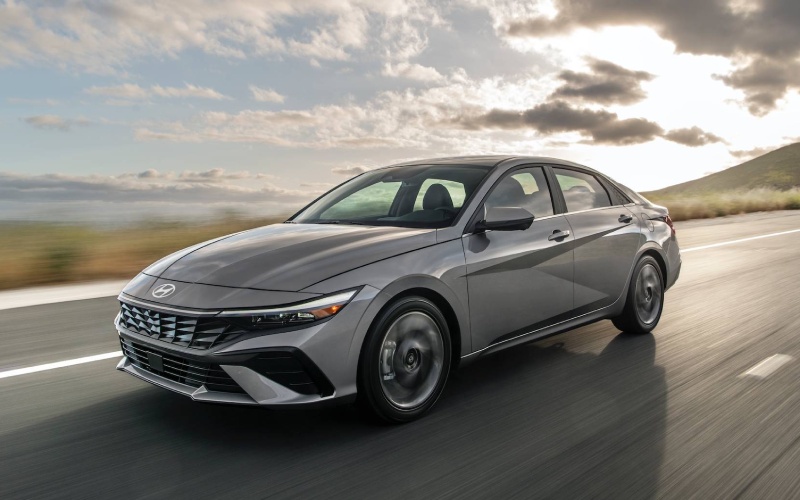
Tustin Hyundai - Which compact sedan delivers smarter driver-assist tech for Irvine, CA commuters — 2026 Hyundai Elantra or 2026 Honda Civic Sedan?
When shoppers ask which compact sedan offers the more intuitive safety and driver-assist experience, the conversation naturally narrows to the 2026 Hyundai Elantra and the 2026 Honda Civic Sedan. Both are equipped with robust, camera-and-radar-based suites that continuously monitor traffic and lane markers. The question isn’t whether these systems exist — it’s how they feel day to day. That comes down to how smoothly the car applies brake pressure, how naturally it centers in the lane without ping-ponging, and how clearly it communicates with the driver. Hyundai SmartSense provides Lane Keeping Assist, Lane Following Assist, Forward Collision-Avoidance Assist, available Blind-Spot Collision-Avoidance Assist, and Adaptive Cruise Control with Stop & Go. Honda Sensing® mirrors much of that capability with Collision Mitigation Braking System™, Road Departure Mitigation, Adaptive Cruise Control with Low-Speed Follow, Lane Keeping Assist System with Traffic Jam Assist, and Traffic Sign Recognition. On paper, it’s a close match; in the driver’s seat, nuances appear quickly.
The Elantra’s lane-centering behavior is confidently calibrated, providing gentle, consistent steering support that reduces micro-corrections on longer freeway runs. It pairs well with Stop & Go capability in traffic, minimizing the lurching some drivers associate with less refined systems. Hyundai’s hybrid model uses a geared 6-speed dual-clutch automatic, which helps the vehicle accelerate and decelerate in steps that feel more like a traditional transmission. That matters when adaptive cruise is managing gaps — the car’s responses feel organic, with fewer sudden rev flares. The Civic’s execution is similarly capable, and its Traffic Jam Assist lightens the load in congestion. Its hybrid’s e-CVT is smooth and quiet, though the power delivery can be more of a continuous swell than the stepped feel some drivers prefer. If you place a premium on feedback clarity — what the car is doing and why — Elantra’s system tuning and instrument-cluster prompts make it easy to understand interventions without being distracting.
Another key differentiator is how these systems integrate with the cockpit. On upper Elantra trims, a large digital instrument cluster works in concert with the central display to present lane lines, leading-vehicle distance, and camera views with clean graphics. The Civic’s Digital Instrument Cluster and available Google built-in on the top trim also provide valuable context, including navigation cues. The practical takeaway is simple: both cars give you the data you need, but Hyundai’s dual-screen aesthetic ties drive assistance, navigation, and audio into a more unified visual field that many commuters find calming during hectic drives.
Road noise and chassis tuning are the last pieces of the puzzle. Active safety works best when the underlying platform is quiet and composed; the sensors see more, and drivers feel less fatigue. The Elantra’s rigid body structure and attention to wind and tire noise create a stable foundation for its assistance features to shine. The Civic’s multi-link rear suspension and carefully tuned steering deliver their own brand of confidence. A thorough test drive of both back to back is the surest way to sense the difference — especially on familiar stretches of your daily commute.
Tustin Hyundai offers guided evaluations that put these systems to work in real-world conditions, from tight parking lots to multi-lane highways. Our product specialists calibrate the routes to showcase what matters to you most — lane-centering nuance, Stop & Go smoothness, blind-spot alerts on busy arterials, or camera clarity in low light. You leave knowing not only what the systems do, but how they do it in the context of your routine.
Frequently Asked Questions:
Will lane-centering keep the car in the middle of the lane on winding highways?
Lane-centering assists in both sedans can provide gentle steering input on well-marked roads, but you must remain engaged. On winding highways, the Elantra’s tuning tracks gradual bends with steady input while clearly prompting you when hands are needed.
How smoothly do these systems handle stop-and-go traffic?
Each model can stop and restart automatically within system limits. The Elantra’s Stop & Go pairs with its geared hybrid transmission to create a stepped, natural feel, while the Civic’s e-CVT emphasizes seamless continuity — both reduce fatigue in congestion.
Do blind-spot and cross-traffic alerts work at parking-lot speeds?
Yes. Both vehicles provide visual and audible cues at lower speeds. Hyundai’s available Rear Cross-Traffic Collision-Avoidance Assist can also apply brake pressure if necessary to help avoid backing collisions.
We are serving Irvine, Lake Forest, and Fountain Valley with side-by-side drive-assist comparisons tailored to your commute. Schedule a drive and bring your daily questions — our team will set up routes that spotlight the exact features you care about most, all in a calm, informative setting that lets the technology speak for itself. For a streamlined visit and a clear, helpful demo, count on Tustin Hyundai.