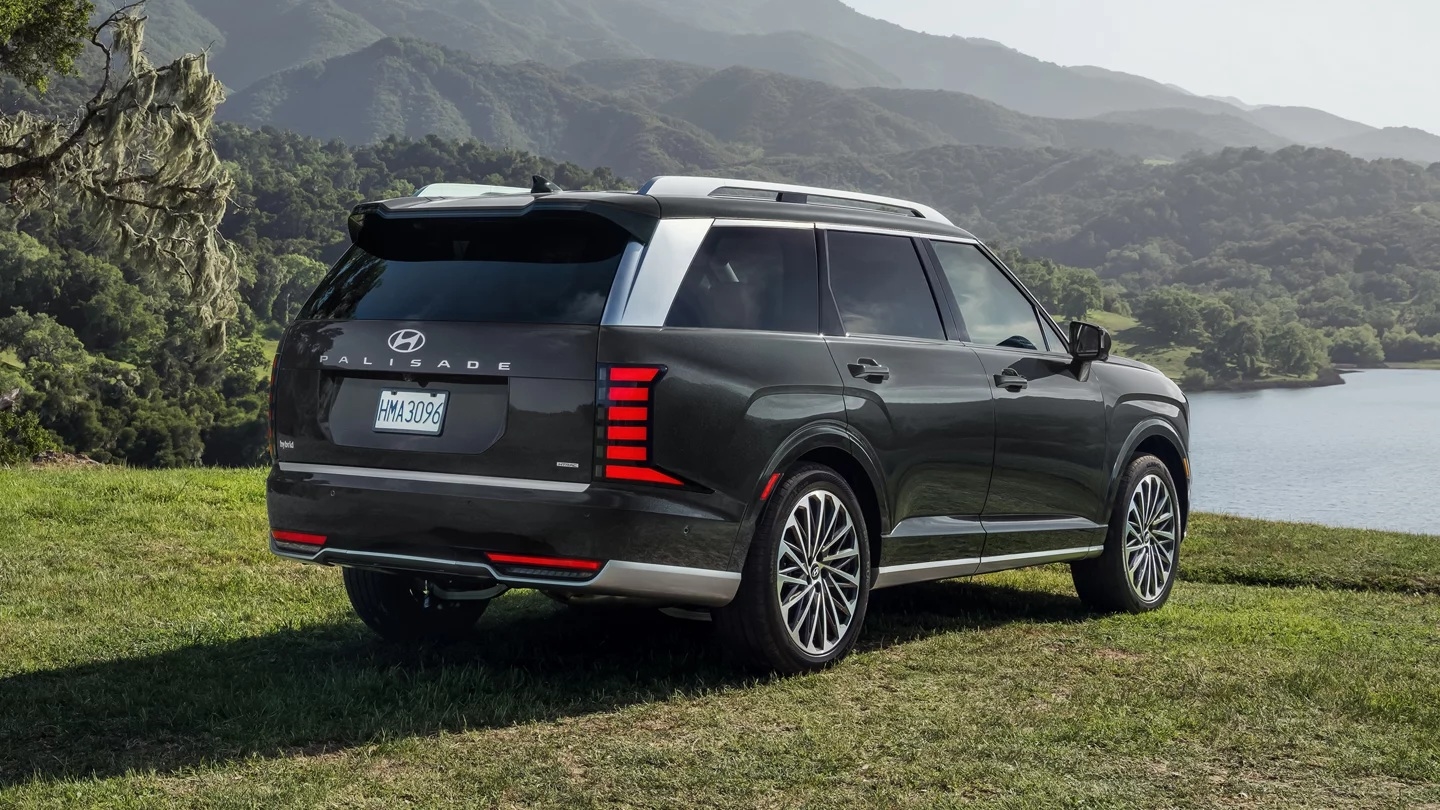
Is a Palisade Hybrid Right for Family Gatherings?
A Palisade Hybrid for families makes sense when you regularly carry relatives, need three usable rows, and want better fuel efficiency than the gasoline-only Palisade. The deciding factors are seating layout, luggage needs, and the weight of everyone and everything aboard. Here at Tustin Hyundai, part of parent dealer group Patterson Autos, we help shoppers connect those practical needs with the right Hyundai. For gatherings around Tustin or longer holiday visits, the best choice starts with your actual passenger count, not simply the largest cargo figure.
Key Takeaways
- The Palisade Hybrid seats seven or eight, depending on configuration.
- Cargo space measures 19.1 cubic feet behind the third row when every passenger seat is available.
- Captain's chairs can provide a center passage, while a second-row bench adds an eighth seating position.
- Hybrid fuel economy improves on the gasoline-only Palisade, but ratings differ by trim and drivetrain.
- Passenger capacity and payload are separate limits, so check the specific vehicle's loading label.
Palisade Hybrid Passenger Space and Seating Configurations
The Palisade Hybrid offers seven-passenger seating with second-row captain's chairs or eight-passenger seating with a second-row bench. The better configuration depends on whether your family needs an additional seat or a passage between the second-row seats.
For two parents, two children, and visiting grandparents, captain's chairs may provide a convenient layout. The space between them can offer a route toward the third row without moving a second-row seat, provided child restraints and passengers do not block it.
A bench makes more sense when the eighth position will genuinely be used. However, three seating positions do not guarantee that three particular child restraints fit side by side. Seat width, buckle access, restraint dimensions, and approved installation positions all matter.
We recommend mapping out who sits where before choosing a configuration. During a vehicle comparison, have adults try the third row while the second row remains positioned for its usual occupants. Extra legroom created by moving one row forward only helps if the passengers ahead still fit comfortably.
How Much Palisade Hybrid Cargo Space Remains With Every Seat in Use?
Palisade Hybrid cargo space measures 19.1 cubic feet behind the third row. That is the relevant capacity when every passenger seat is in use, rather than the larger figures advertised with seats folded.
Folding the third row increases cargo capacity to 46.3 cubic feet. Folding both rear rows opens 86.7 cubic feet, but those arrangements remove passenger seating from service.
For a gathering in Irvine, the practical question is whether your stroller, serving dishes, gifts, and overnight bags fit together behind the occupied third row. A cubic-foot measurement cannot tell you whether a rigid cooler and a wide stroller will share the available floor space.
One useful in-person check is bringing your largest everyday item to the vehicle. We recommend loading that first, then assessing the remaining space. Soft-sided bags may fit around awkward shapes more easily than several rigid suitcases. If the entire group and its luggage cannot fit appropriately, planning a second vehicle may be more practical than forcing everything into one SUV.
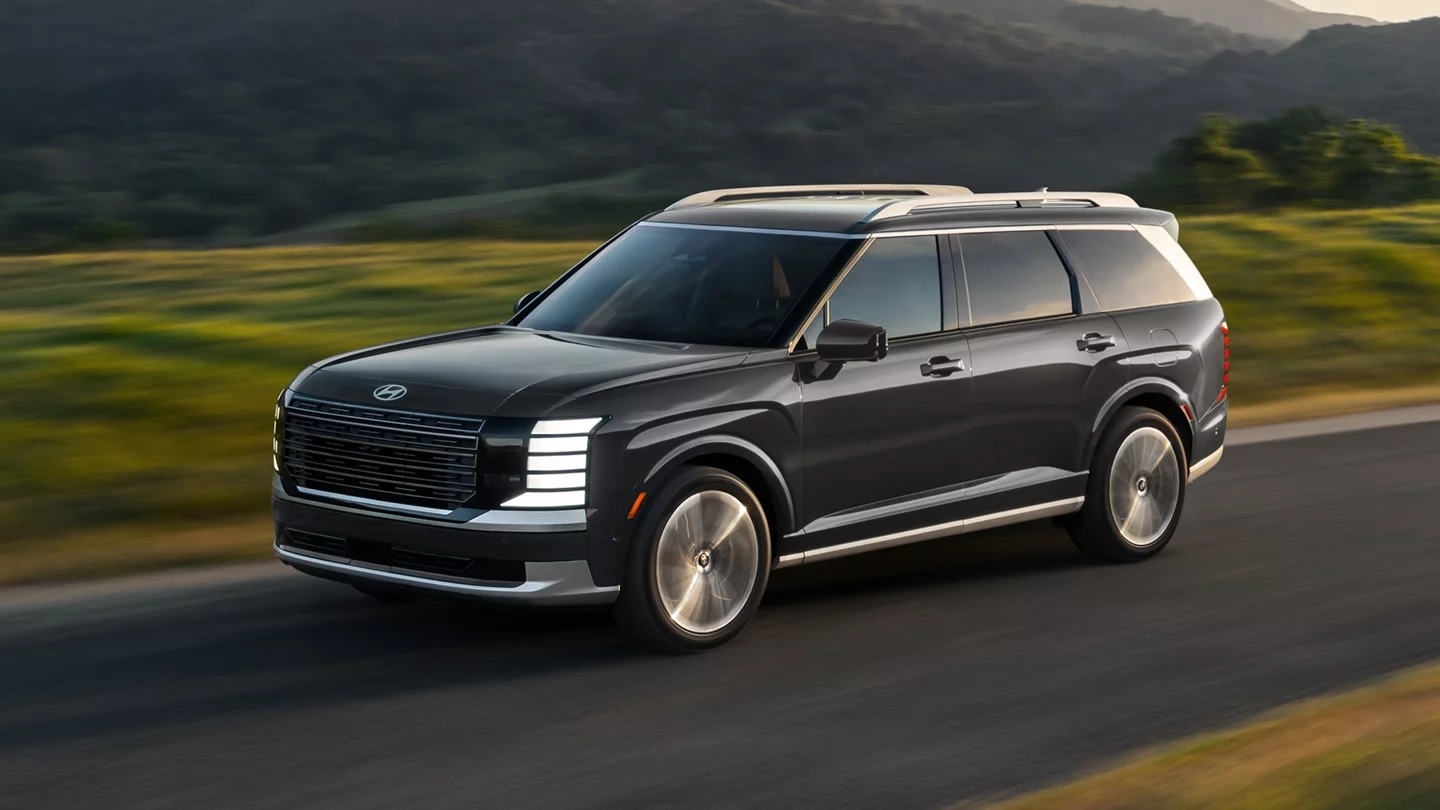
Palisade Hybrid Third-Row Access With Child Seats Installed
Palisade Hybrid third-row access depends on the seating configuration and the size and placement of installed child restraints. Captain's chairs can preserve a center passage, while a bench generally requires access around a movable second-row section.
Do not assume a seat's access mechanism can be used with a child restraint attached. Follow the specific vehicle's owner's manual and the restraint manufacturer's instructions before moving or folding that seat. Hyundai also warns against folding rear seats while passengers are seated there or getting out.
During a test drive, we suggest checking the entry route with your own child restraints rather than evaluating an empty cabin. A rear-facing restraint may affect the front seat's position, while another installation may narrow the path toward the third row.
Have the relative who will actually use the third row try entering and exiting while parked. This reveals whether the opening, step-in movement, and available handholds suit that person. To compare the layouts directly, arrange a seating-focused test drive at Tustin Hyundai.
Palisade Hybrid Fuel Economy for Family Trips
Palisade Hybrid fuel economy is substantially better than the gasoline-only Palisade in the comparable EPA ratings below. Trim and drivetrain matter, so the highest hybrid rating should not be applied to every available vehicle.
For a clearly matched comparison, the 2026 Palisade Hybrid Blue SEL and Blue SEL Premium with front-wheel drive earn EPA estimates of 33 city, 35 highway, and 34 combined mpg. The gasoline-only Palisade with front-wheel drive earns 19 city, 25 highway, and 21 combined mpg for that same model year.
The hybrid's advantage is especially pronounced in the city rating, although it also improves the highway estimate. Hybrid power for seasonal driving can therefore suit a schedule that mixes Tustin errands, freeway travel, and several family stops. Actual mileage varies with driving conditions, driving habits, vehicle condition, and equipment.
Higher-equipment versions illustrate why the window sticker matters: the 2026 Hybrid Limited and Calligraphy with front-wheel drive earn 31 combined mpg, while their all-wheel-drive counterparts earn 29 combined mpg. Confirm the rating on the specific vehicle you are considering.
For Palisade Hybrid family trips to Anaheim and beyond, compare the drivetrain you need rather than choosing solely by the best advertised number.
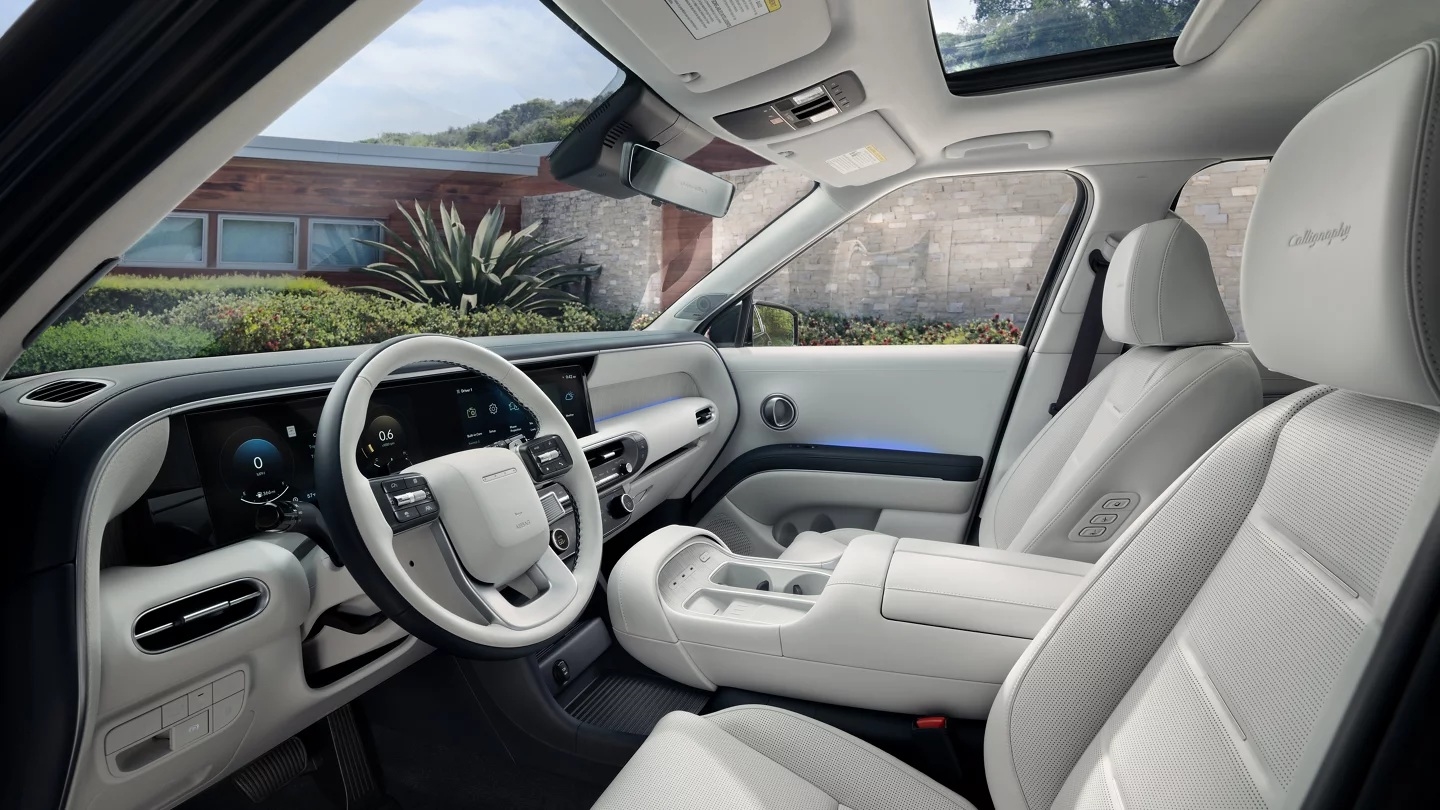
Passenger and Luggage Weight Limits Before Loading
Families should check the vehicle's occupant-and-cargo limit, gross vehicle weight rating, and axle ratings before loading a full cabin. Payload means the combined weight the vehicle can carry, including people and cargo, not simply the weight of luggage.
Start with the Tire and Loading Information label at the driver's door opening. Hyundai's loading guidance identifies vehicle capacity weight as the maximum combined weight of occupants and cargo. Subtract everyone's weight, then account for child restraints, luggage, gifts, and other carried equipment. Trailer tongue weight also uses carrying capacity when towing.
The important ownership consideration is that eight seating positions do not automatically mean capacity for eight adults plus unlimited baggage. Use the specific vehicle's labels rather than assuming one payload figure applies across every trim.
We recommend reviewing those labels during the shopping process, especially when your usual gathering involves a full passenger load. Cargo volume answers whether belongings fit; weight limits answer whether the planned load stays within the vehicle's ratings.
Comparing Hyundai SUVs for Your Family's Routine
The Palisade Hybrid deserves consideration when regular third-row use and seven- or eight-person capacity drive the decision. When comparing the Santa Fe and Palisade, focus on the seating and luggage arrangement your household needs most often, not only the busiest holiday weekend.
The Santa Fe Hybrid also offers three-row seating, making it a relevant vehicle to evaluate alongside the Palisade Hybrid. Try both with the same passengers and essential cargo so the comparison reflects your routine.
Explore Palisade Hybrid Models in Tustin
The right Palisade Hybrid is the one that accommodates your passengers, child restraints, luggage, and driving needs together. Visit Tustin Hyundai in Tustin, part of parent dealer group Patterson Autos, to review our current selection of Palisade models and confirm available seating configurations. Schedule a test drive and bring your child restraints and largest travel bag so we can help you evaluate the vehicle around your next family gathering.
Instagram | YouTube | Facebook | LinkedIn
*Penned by AI, polished by humans